


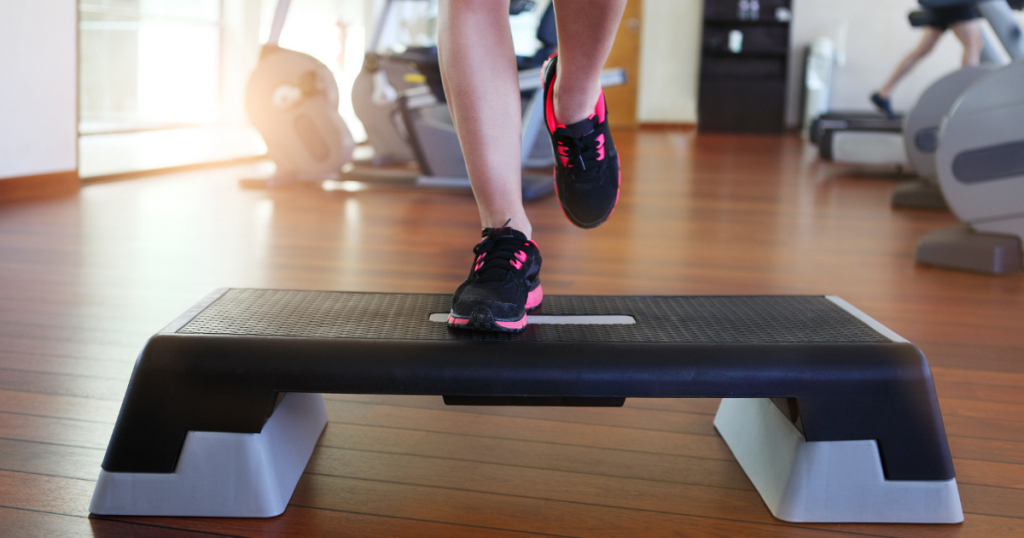
The step up exercise (often searched as “step ups” or “work out step up”) is a highly effective lower-body movement that mimics everyday activities like climbing stairs. It’s a unilateral (single-leg) exercise that builds strength, improves balance, boosts cardiovascular fitness, and targets multiple muscle groups—making it a staple in strength training, rehab programs, and even cardio workouts.
Whether you’re using a gym bench, aerobic step platform, stairs at home, or adding dumbbells, step ups are versatile and scalable for beginners to advanced athletes.

What Muscles Do Step Ups Work?
Step ups primarily target the lower body while engaging the core for stability.
Primary muscles:
- Quadriceps (front of thighs): Drive the upward movement.
- Glutes (buttocks, especially gluteus maximus): Power hip extension at the top.
- Hamstrings (back of thighs): Assist in knee flexion and hip extension.
Secondary muscles:
- Calves (gastrocnemius and soleus): Help with push-off and balance.
- Core (abs, obliques, lower back): Stabilize the body to prevent wobbling.
- Smaller stabilizers in hips and ankles for balance.
This unilateral nature helps correct imbalances between sides, unlike bilateral exercises like squats.

Benefits of Step Up Exercise
Step ups offer functional strength that translates to real life and sports.
Key benefits:
- Builds lower-body strength and power → Great for athletes (runners, hikers, sports requiring explosive legs).
- Improves balance and coordination → Unilateral work enhances proprioception and reduces injury risk.
- Boosts cardiovascular fitness → High reps or fast pace make it a cardio stepper exercise.
- Corrects muscle imbalances → Stronger leg compensates less, promoting symmetry.
- Low impact (compared to running/jumping) → Joint-friendly yet effective for fat loss and toning.
- Versatile for home or gym → Minimal equipment needed.
- Enhances glute activation → Better than many squats for targeting glutes.
Research shows unilateral exercises like step ups improve athletic performance and reduce fall risk in older adults.
How to Do the Step Up Exercise (Proper Form)
Use a sturdy bench, box, or step about knee height (lower for beginners).
- Stand facing the platform with feet hip-width apart.
- Place your right foot fully on the platform.
- Drive through your right heel to step up, bringing left foot onto the platform (stand tall, hips extended).
- Lower back down controllably with the left foot first, then right.
- Repeat on one side or alternate.
Sets/reps: 3-4 sets of 8-15 reps per leg.
Common mistakes to avoid:
- Leaning forward or using momentum.
- Pushing off the trailing leg (focus on the working leg).
- Letting the knee cave inward.
For dumbbell step ups: Hold weights at sides for added resistance.

Step Up Exercise at Home (No Gym Needed)
You don’t need fancy exercise step up equipment—use household items.
- Stairs: Step up and down one or two steps (great for “stepping up and down exercise”).
- Sturdy chair or stool: Ensure it’s stable and knee-height.
- Books or stacked items: Create a safe platform.
Home variations keep it simple and effective.

Cardio Stepper Exercises and Stepper Board Workouts
For cardio, use an aerobic step platform (adjustable riser bench).
Stepper board exercises ideas:
- Basic step up/down (fast pace for HIIT).
- Lateral step ups.
- Step up with knee drive.
- Circuits: Combine with jumping jacks or burpees.
These turn step ups into fat-burning cardio sessions.
Alternatives to Step Ups
If step ups aren’t suitable (e.g., knee issues or no equipment), try these:
- Bulgarian Split Squats — Elevated rear foot for similar unilateral work.
- Reverse Lunges — Step back instead of up.
- Walking Lunges — Dynamic alternative.
- Box Jumps (advanced) — Explosive power version.
- Single-Leg Romanian Deadlifts — Hamstring/glute focus.
- Glute Bridges or Hip Thrusts — Floor-based glute emphasis.
These provide similar benefits without the step.

Conclusion
The step up exercise is a powerhouse move for building stronger legs, glutes, balance, and cardio endurance. Whether you do basic bodyweight versions at home, add dumbbells for progression, or use a stepper board for cardio, it’s adaptable to any fitness level.
Start with proper form, progress gradually, and incorporate it 2-3 times per week. Pair with a balanced workout routine for optimal results—you’ll notice improved strength and stability quickly!